
Dental Implant Restoration in Milwaukie, OR
If you’ve recently had dental implants placed or are considering this tooth replacement option at Sue Walker Dentistry, understanding the restoration process is an important part of completing your brand new smile.
While the dental implant itself serves as an artificial tooth root, the restoration is what gives you back the function and appearance of a natural tooth.
What Is Implant Restoration?
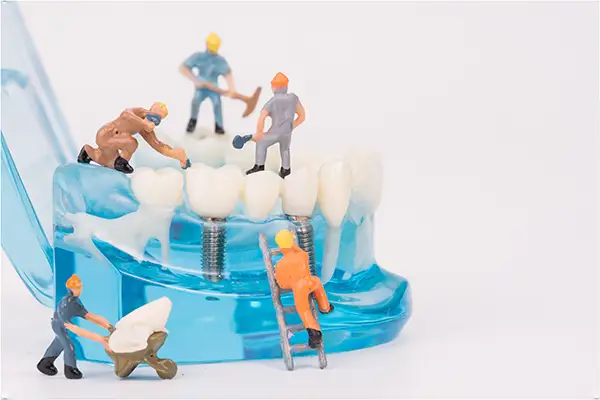
Implant restoration refers to the process of attaching the visible portion of your replacement tooth to the dental implant that has been surgically placed in your jawbone.
The restoration itself is the custom-made crown, bridge, or denture that sits on top of the implant, creating the final result you see when you smile. This crucial step transforms the foundation of your dental implant into a fully functional tooth that looks, feels, and works like your natural teeth.
The Implant Restoration Process
After your dental implant has been placed and has had time to integrate with your jawbone through a process called osseointegration, you’ll be ready for the restoration phase. This process typically takes several months, but is important for healing.
The dentist will attach a small connector piece called an abutment to the implant. This component serves as the link between the implant post and your final restoration.
Next, detailed impressions or digital scans of your mouth are taken to ensure your restoration fits correctly and matches your natural bite. These measurements are sent to a dental laboratory where skilled technicians craft your custom restoration.
The result is a tooth replacement designed specifically for your unique smile, taking into account the shape, size, and color that will blend naturally with your existing teeth.
Types of Implant Restorations
Depending on your specific needs, implant restorations can take several forms. A single crown restoration replaces one missing tooth and is the most common type of implant restoration.
For multiple missing teeth, an implant-supported bridge can replace several consecutive teeth using two or more implants as anchors. Patients missing most or all of their teeth may benefit from implant-supported dentures, which provide stability and confidence that traditional dentures cannot match.
Benefits of Quality Implant Restoration
A well-crafted implant restoration offers numerous advantages beyond simply filling the gap left by a missing tooth. These restorations are designed to withstand normal chewing forces, allowing you to enjoy your favorite foods without worry.
The materials used in modern restorations are highly durable and stain-resistant, maintaining their appearance for many years with proper care.
Additionally, because implant restorations are supported by the implant post in your jawbone, they help preserve bone density and maintain your facial structure. This prevents the sunken appearance that can occur with missing teeth and provides long-term benefits for your oral health.
Your Path to a Complete Smile
Implant restoration represents the final and most visible stage of your dental implant treatment. By working closely with our dental team at Sue Walker Dentistry and following our recommendations for care, you can look forward to a restoration that restores both the function and beauty of your natural smile.